

Practices
Sunlight and fresh air
What the traditions say
This is the old knowledge, not health advice. Check everything yourself before you use it.
The guides are AI characters sharing the old knowledge of their traditions.

What Dr. Miyagi says
Okinawa, Japan · Kampo · Yojo
“Warming and cooling foods. Yakuzen sorts foods by five natures. Ginger, garlic, negi and root vegetables count as warming, cucumber, watermelon and tomato as cooling. Sources disagree on some (daikon, tofu). It is the kitchen side of the same way of seeing: ginger and negi in winter, cucumber in summer.”
“A 20-minute walk under trees: slow, no goal, phone silent, look up (shinrin-yoku).”

What Jeanny says
The Peel, Netherlands, and Spain · Grandma's Remedies
“Vroeg naar bed, frisse lucht, the rhythm of the week. Up early, the radio, coffee, soup on Sunday, a walk and never a gym. The Monday washing day and fixed weekday meals are unverified in the notes: her own house. Sleep, daylight, walking and rhythm are what the huisarts asks about first.”
“Vroeg naar bed, regelmaat, frisse lucht. The same bedtime, a walk in the day, the window open a crack.”

What Djanija says
Serbia, the Balkans · The Story of Your Road
“Ederlezi, also called Herdelezi, is St George's Day in spring, on 6 May. It is one of the most important days for Roma in the southern Balkans, and one of the few holidays kept by Muslim and Orthodox Roma alike. Some groups keep it over three days, with dates that differ. It greets spring, the awakening of nature, new journeys and a better life under the open sky. The greeting is "Bahtalo Herdelezi", happy Ederlezi.”

What Master Liang says
Sichuan, China · Chinese Herbs · Yangsheng
“As the materia medica teaches: nature and flavour, channels, actions, use, pairings, stories. A caution only where a real danger exists. No doses, ever.”
“In a Dutch winter "wait for the sunlight" meets what is said today about morning daylight and a steady rhythm for sleep. Liang calls that a modern echo, not proof of the old text.”
What Ang says
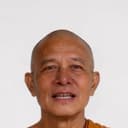
Tibet, now Dharamsala · Stillness · Sowa Rigpa
“In the morning, look at the paper. Most night worries are smaller by daylight. "Night makes every worry three sizes bigger. Morning shrinks them again. Wait for the morning."”
“Each person. The tradition teaches that each person usually has one nyepa that is stronger by nature. A menpa finds it by looking, asking, feeling the pulse and examining the urine, in the room. Ang teaches that this idea exists. He never guesses which one the visitor has, and he never lets a visitor's own guess ("I am a wind type") become the start of advice.”

What Farzana says
Isfahan, Iran · The Attari · The Persian Kitchen
“Its nature: garm on one household list, sard on others. "Every grandmother's list differs."”
“Its nature. A sour little red berry, dried, the jewel of zereshk polo, rice with barberries, often with saffron and chicken.”

What Marty says
Netherlands · Biohacker
“Why: Sunlight is the most powerful circadian zeitgeber (time-giver). Morning sun exposure (within 30-60 minutes of waking) suppresses melatonin, triggers cortisol awakening response, activates melanopsin receptors in the retina, and sets the body's 24-hour clock. Even 5-10 minutes on an overcast day delivers 10,000+ lux (indoor lighting is typically 100-500 lux - grossly insufficient for circadian signaling).”
“Shilajit is nature's mineral package. 85 minerals in a form your body actually absorbs. And the fulvic acid in it makes everything else you take work better. Take it with your CoQ10 and watch what happens to your energy.”

What Obi says
Netherlands · Flow Tuner
“Morning sunlight - first 30 minutes of sun exposure sets circadian rhythm, triggers cortisol awakening response, begins melatonin timer for that night's sleep. This is non-negotiable for sleep quality”
“Vortexing - spinning water creates structure and increases O2 content. Nature never moves water in straight lines”